


Subtle body as the path to Enlightenment and lighting the inner fire— the five chakras, three channels and two drops of Tantric Buddhism and their practice
“In my teaching I emphasize that Enlightenment is found in the body. This draws on Dzogchen, where you are told that when you put your awareness in the body in the right way, you encounter your awakened state. I also point out that through meditation we realize that awareness is not located in the head, it is in the whole body.” Reginald Ray, Tibetan Scholar and Meditation Teacher
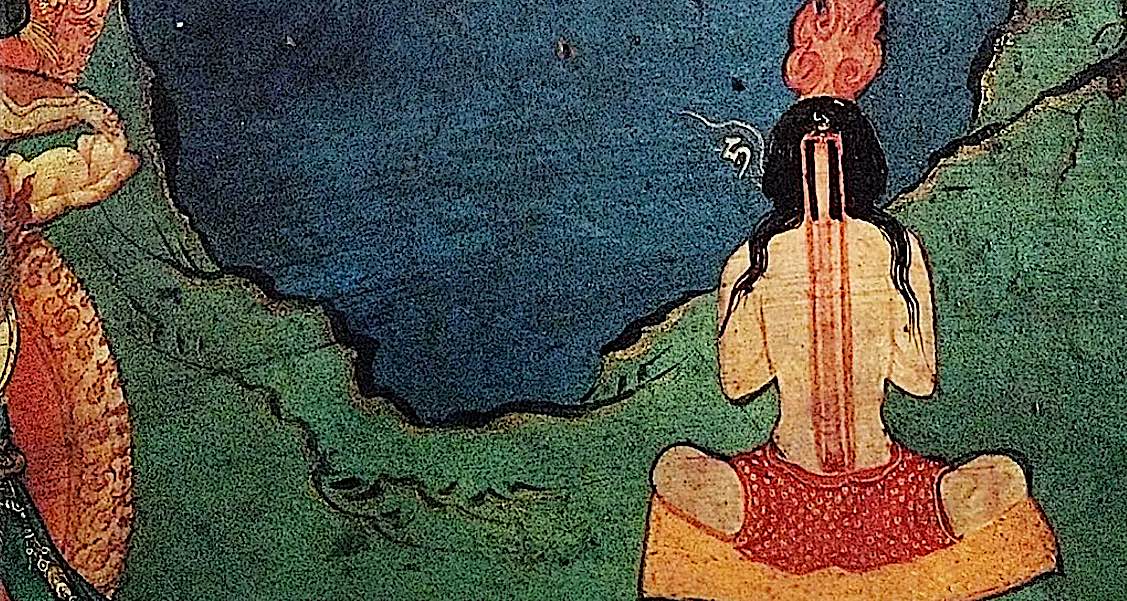
The “whole body” referred to by Reginald Ray includes both the coarse body and the subtle body. In Tantric Buddhism, the understanding of the subtle body is essential: chakras and channels.
Note: Seek the advice and permission of a teacher to engage in actual Tantric practices. This feature is only a general information story. Practice requires full instruction.
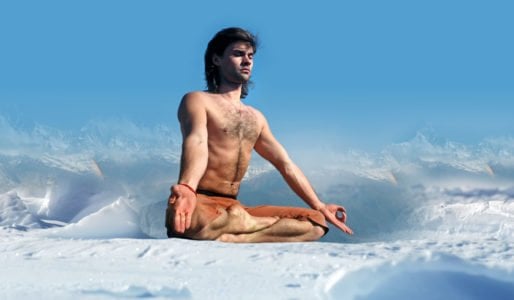
In Tantric Buddhism we recognize more than one body for humans, including — as explained by H.E. Zasep Rinpoche in a Medicine Buddha retreat — “coarse body… our organs, lung, and heart, this is our coarse body. Then, there is subtle body. According to Tantra, we talk about chakras, and we have energy channels, the subtle body.”
Healing practices in Vajrayana inevitably involve subtle body. Centuries of successful healing Tibetan and Chinese medicine and various Tantric healing methods certainly present convincing anecdotal support for its effectiveness.
Understanding the subtle body is also critical to practicing certain generation and completion stage yogic practices, including “deity yoga” and “tummo, and certainly the higher tantric practices and completion practices. Even the most basic of understandings of “subtle body” is helpful to all Tantric Buddhist meditations.
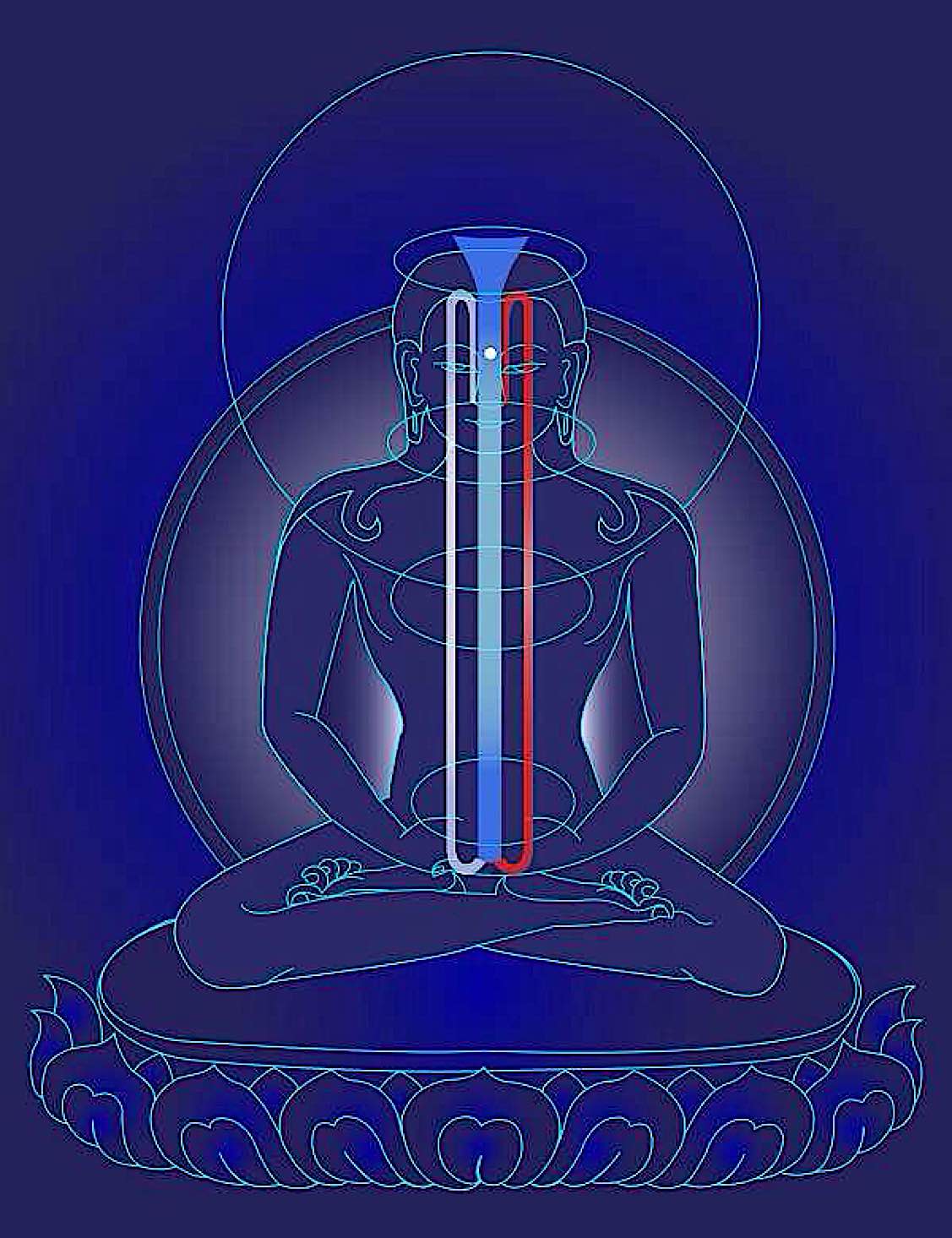
They are the junction points for the three main channels (central, left and right), ultimately connecting the 72,000 nadis (channels) which carry vital La (“life force” in English, Prana in Sanskrit, Chi, in Chinese) to every cell of the body.
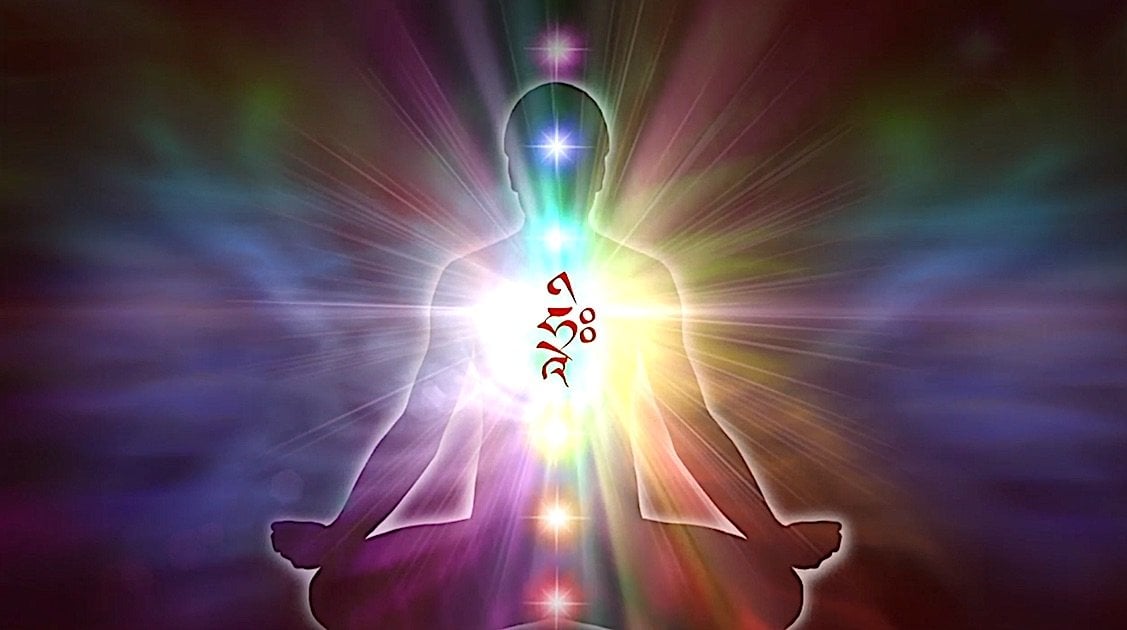
Reginald Ray said:
“According to tantra, Enlightenment is fundamentally and originally present in the body. By putting one’s awareness in the body you find that the further down you go the more primordial, unconditioned and unmanifest is the energy you encounter. The chakras begin at the perineum, which is the most primordial level of awareness, and as you go upwards they are more connected with expression. At the navel there is a sense of the earth, stability and equanimity; at the heart is a feeling of warmth and compassion; the throat is about communication, expression and connection; and the head is less a conceptual centre than a place where the energy reaches a crescendo. So the different chakras have very different feels.”
At a more pragmatic and fundamental level, subtle body is essential for healing, such as Medicine Buddha meditation or La Gug. For higher practices, subtle body is tied to completion practices and a key to Enlightenment or realizations. Also, the chakras and even the number of spokes or petals in each chakra are critical to visualizing the “body mandala” — a higher-tantra practice. Famously, it is the key to Tummo practice — generating the inner furnace.
Some practices focus on only one chakra — for example, visualizing the seed syllable of Buddha at one’s heart — and others emphasize three, notably crown, throat and heart (for example, when prostrating). Most, but not all Tantric Buddhist Practice emphasize the five chakras of head, throat, heart, navel, and secret; or, at least the four of crown, throat, heart, navel.
The first three are important, as they symbolize the activities of the Buddhas, and ourselves: body, speech and mind:
- Crown: Body — also, “waking” activity
- Speech: Speech — also, “dreaming” activity;
- Heart: Mind — also “sleeping” activity. Note: in Tantra, “mind,” not to be confused with ‘brain,’ is always associated with the heart, not the head.
Working with the energies of the subtle body should be guided by a teacher. Teacher Reginald Ray explains:
“You can talk about them in general, but Tibetan tradition maintains it is better not to expose untrained people to the actual techniques, because they can mess you up when attempted without the proper training. They are ways of contacting the energy domains the chakras represent in a much more naked way than humans normally experience. As human beings we never really understand directly the energy of love or expression, or whatever. Our experience of them is filtered through a highly developed process of ego: desires, aims and so on. Sexuality is the one energy that can break through, which is why people are so obsessed with it. It is the one aspect of their life where they have to let go.”
In working with the chakras we remove the coverings of our energy system and meet our energy much more directly. When ego templates are stripped away we are left, for example, with the spontaneous outpouring of love for other people. The reason we work with chakras in Tibetan Buddhism is to actualise the Bodhisattva Vow of saving all beings. We have to realise the great compassion of the Buddha, where there is no impediment between the natural compassion of the energetic body and other people.
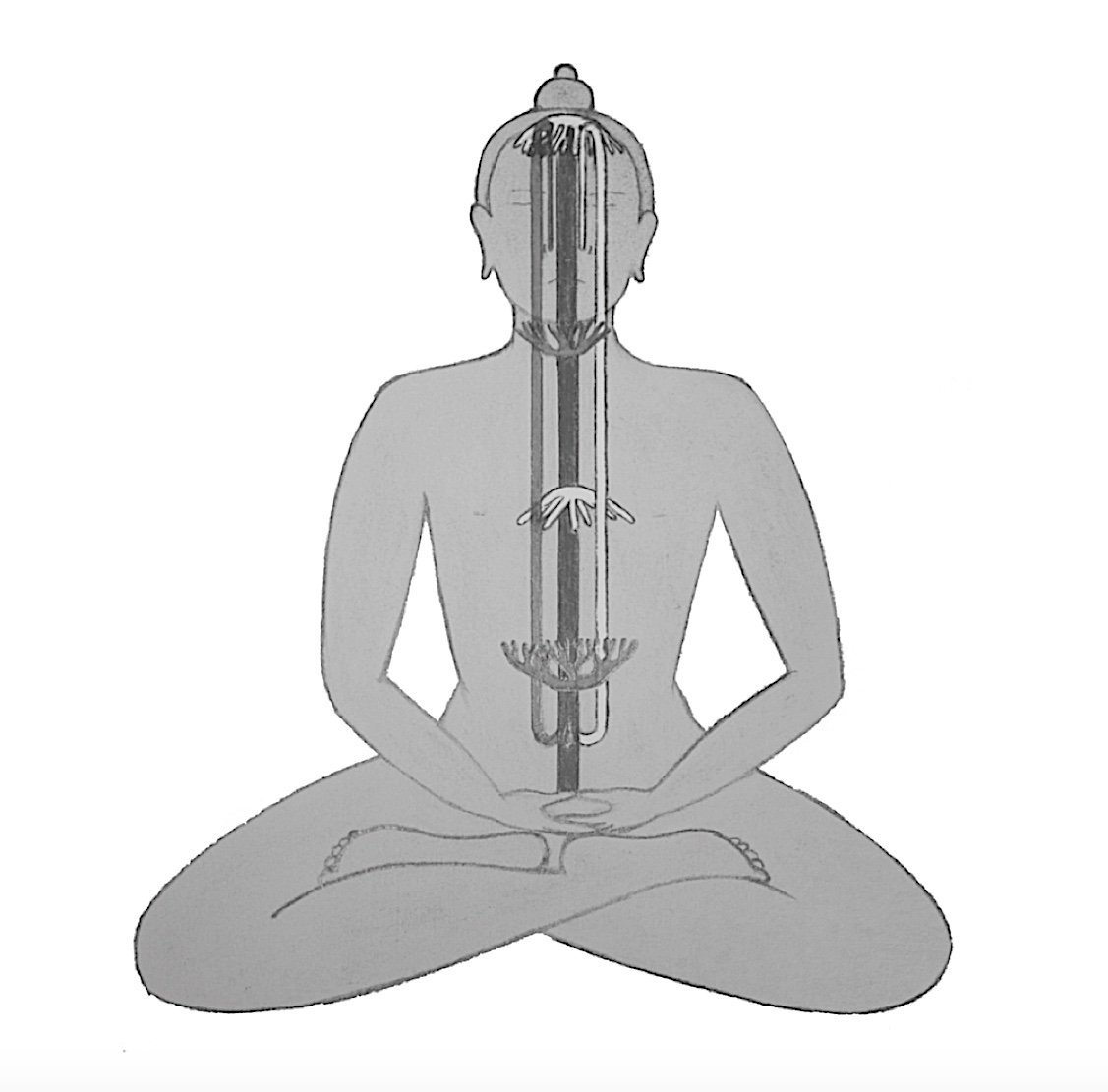 Without getting into specifics of a practice — which requires a teacher and empowerment — other vital differences with Indian Tantra include the associations of three of the chakras with the “bodies” of the Buddhas:
- Throat: Sambhogakaya, Body of Enjoyment (sometimes “Bliss Body” — which is why it is called the “Enjoyment Chakra.” This is the manifestation of an Enlightened Being as the “object of devotion” or the Body of a Buddha as it appears in the Pure Lands.
- Heart: Dharmakaya, Body of Essence (sometimes ‘Truth Body’ or ‘Unmanifested Body’) — “Dharma Chakra”: this is why, for example, the unmanifested ‘seed syllable’ of the deity is visualized at the Heart Chakra. (Dharmakaya also is associated with our own Buddha Nature, and also with Emptiness.)
- Navel: Nimanakaya, Body of Transformation (sometimes ‘Body of Manifestation’) — “Manifestation Chakra” (For example Shakyamuni Buddha as a human emanation, or ourselves as physical beings.)
What do the bodies mean? In the doctrine of Trikaya, Buddhas can manifest in different “modes of being” depending on the understanding of the student. For example, Shakyamuni Buddha manifested as Nirmanakaya, the Body of Manifestation.
H.E. Zasep Rinpoche explains the importance of “drops” in his teaching on Medicine Buddha:
“Then we have in Tantra, what we call ‘drops.’ Like a drop of water. In Chinese Medicine, they have Yin and Yang, female and male, which must be in balance. Here [in Tantra] we have the drops, we call “essence.” It’s like the “sperm” and the “egg” — the white and red. The white is the “sperm,” and the red is the “egg” — male and female. So, we all have this essence… We call it white bodhicitta and red bodhicitta. Essence.”
Again, without getting into practice details, which require empowerment and instruction from a qualified teacher of lineage, two of the chakras are also associated with the all-important red and white drops. These drops are crucial and fundamental to working with Tantric Buddhism’s understanding of the subtle body as a method for transformation, realizations and, ultimately, Enlightenment. Without going into secret detail, the red drop is visualized in the navel and the white subtle drop in the crown (head) chakra. It is through working with these drops, and the various winds (La) and channels that one can attain realizations of bliss and emptiness — also thought of as compassion (male) and wisdom (female.)
One of the beginning practices for “inner” tantra is the famous “nine breathing exercises of Naropa. Drupon Sangye Nine Breathing Exercises of Naropa:
Taking instruction from a qualified teacher is essential. The attributes of the chakras can vary, depending on the tantra practiced. Also, it’s easy to be confused with either Indian Tantra, or with very pervasive “new age” chakra symbolism and imagery. Forget most of the images you see online for chakras and inner bodies, as these are 99% based on Indian yogas or new age practices.
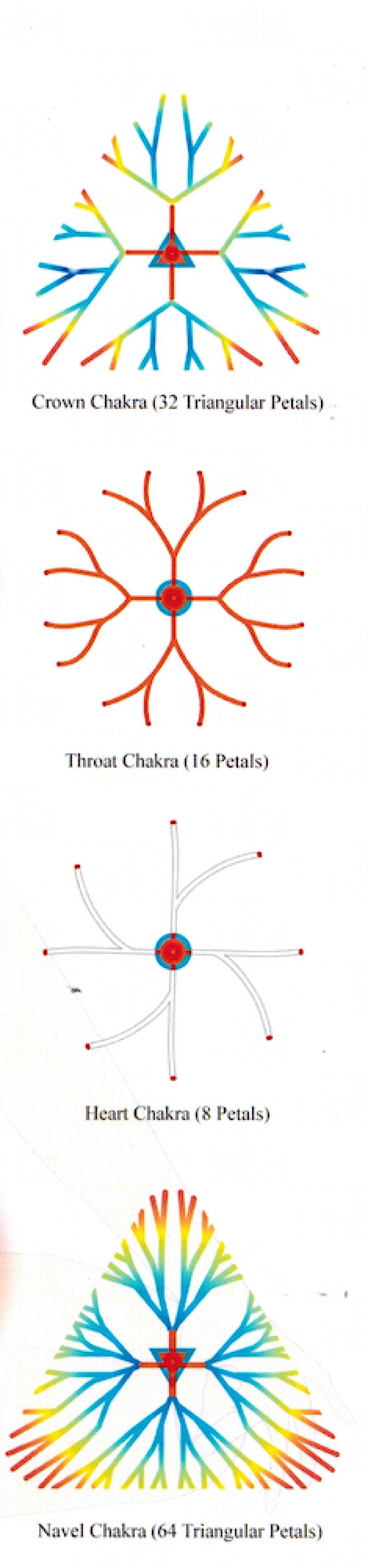
In Buddhist Tantra, for example, the spokes of the wheel (or, alternately, petals of the flower) are entirely different — and these are important, as each spoke or petal represents a flow of energy into channels throughout the subtle body:
- 32 spokes or petals at the crown chakra (head)
- 16 spokes or petals at the throat chakra
- Eight spokes or petals at the heart chakra
- 64 spokes or petals at the navel chakra.
- Crown chakra: Mahsukha chakra • 32 spokes or petals • white drop • activity of body • waking • wrathful deities
- Throat chakra: Sambhoga chakra • 16 spokes or petals • Sambhogakaya enjoyment body • activity of speech • dreaming • wisdom deities • fire element
- Heart chakra: Dharma chakra • eight spokes or petals • Dharmakaya • activity of mind • sleeping • peaceful deities • space element
- Navel chakra: Nirmana chakra • 64 spokes or petals • red drop • Nirmanakaya or manifested body • activity of manifestation • physical manifestations (such as Shakyamuni Buddha) • earth element
All tantric practices, even the basic ones, include visualization of at least these three chakras. The remaining two, navel and secret, are always there, but may not be visualized actively in more basic practice. They are critical, however, to higher tantra, tummo, the Six Yogas of Naropa, and Completion Practices — all of which are higher practices requiring initiation and teachers.
The colours and correspondences assigned to the chakras varies by individual Tantra. When practicing a Higher Tantra, the student should focus on the correspondences of that tantra instruction.
- Crown (white): Body, Dhyani Buddha Vairochana or Vajrasattva
- Throat (red): Speech, Dhyani Buddha Amitabha, and Padma Family (includes Chenrezig, Hayagriva and so on)
- Heart (blue): Mind, Dhyani Buddha Akshobya, but also including Medicine Buddha, etc.
- Navel (yellow): Tummo Fire, Dhyani Buddha Ratnasmbhava and Jewel Family — i.e. associating Ratnsasmbhava with manifestation and earth.
- Secret (green): Wind Action, Dhyani Buddha Amoghisiddi and the Double Vajra Family including Green Tara.


