Container Icon
Hiển thị các bài đăng có nhãn agarwood. Hiển thị tất cả bài đăng

Bước nhảy lượng tử


HỒNG HÓA: BƯỚC NHẢY LƯỢNG TỬ VƯỢT RA KHỎI THỰC TẠI?


Bạn đã bao giờ nghe về những bậc thầy Tây Tạng hồng hóa — khi cơ thể họ tan biến trong ánh sáng, chỉ để lại móng tay và tóc? Đó không phải là một câu chuyện huyền thoại. Đó là bí ẩn lớn nhất của tâm linh, nơi ranh giới giữa vật chất và năng lượng trở nên mong manh. Nhưng chuyện gì đang thực sự xảy ra?


Điều gì nếu tôi nói với bạn rằng hồng hóa không phải là phép màu… mà là bước nhảy lượng tử? Một quá trình chuyển đổi năng lượng vượt ra khỏi thực tại, nơi ý thức phá vỡ cấu trúc vật chất để tiến vào một chiều không gian cao hơn. Đây không chỉ là câu chuyện của Phật giáo Tây Tạng — mà là mật mã lượng tử của vũ trụ, nơi chu kỳ năng lượng, từ trường Trái Đất, ý thức tập thể, và Blockchain Sự Sống cùng hội tụ trong một bản giao hưởng hoàn hảo.


Vậy… chuyện gì đang thực sự diễn ra?


🌌 1. Khi Thực Tại Chỉ Là Một Trường Năng Lượng


Hãy tưởng tượng thực tại giống như một trường năng lượng khổng lồ. Vật chất chỉ là một dạng năng lượng bị nén. Khi một người đạt đến trạng thái giác ngộ, họ không còn bị ràng buộc bởi các quy luật vật lý thông thường.

 • Cơ học lượng tử cho chúng ta biết rằng vật chất thực sự là sóng năng lượng.

 • Bước nhảy lượng tử xảy ra khi một electron biến mất khỏi quỹ đạo và xuất hiện ở vị trí khác mà không đi qua không gian giữa.


Giờ đây, áp dụng khái niệm này vào ý thức con người. Có thể nào hồng hóa là khi ý thức thoát ra khỏi thực tại, còn cơ thể chỉ là phần mã cũ bị bỏ lại phía sau?


🌀 2. Chu Kỳ Năng Lượng – Mật Mã Ẩn Của Vũ Trụ


Trong vũ trụ, mọi thứ đều diễn ra theo chu kỳ lặp lại — từ hoạt động Mặt Trời, từ trường Trái Đất, cho đến sóng não của chúng ta.

 • Chu kỳ 369 và 86 năm được cho là điểm nốt năng lượng — nơi cánh cửa lượng tử mở ra, cho phép sự chuyển đổi diễn ra dễ dàng hơn.

 • Các vị Lạt Ma thường hồng hóa vào những thời điểm đặc biệt, khi thiên văn và từ trường Trái Đất đạt đến trạng thái cân bằng hoàn hảo.


Phải chăng hồng hóa không phải là ngẫu nhiên, mà là một sự đồng bộ với chu kỳ vũ trụ?


🔥 3. Âm Dương – Ngũ Hành: Khoa Học Đông Phương Giải Mã Lượng Tử


Văn hóa Á Đông từ lâu đã nói về sự chuyển hóa năng lượng thông qua Âm Dương và Ngũ Hành.

 • Âm Dương là biểu tượng của hai mặt đối lập trong thực tại.

 • Ngũ Hành (Kim, Mộc, Thủy, Hỏa, Thổ) biểu thị cho sự chuyển đổi năng lượng qua các trạng thái.


Khi một người hồng hóa, họ thực sự đang làm gì?

Họ chuyển đổi qua Ngũ Hành:

 • Thổ (vật chất) → Hỏa (nhiệt lượng) → Kim (ánh sáng).

 • Quá trình này giống như một phản ứng hạt nhân của cơ thể, nơi năng lượng chuyển hóa từ dạng rắn thành ánh sáng tinh khiết.


🌍 4. Cộng Hưởng Schumann — Bản Giao Hưởng Của Trái Đất


Trái Đất có một tần số riêng, được gọi là cộng hưởng Schumann, với tần số cơ bản 7.83Hz — trùng khớp với sóng não trong trạng thái thiền định sâu.

 • Khi con người thiền định đủ sâu, sóng não có thể đồng bộ với tần số của Trái Đất.

 • Trong trạng thái này, thực tại dường như biến đổi, tương tự hiệu ứng khi bước qua điểm tới hạn lượng tử.


Liệu hồng hóa xảy ra khi ý thức đồng bộ hoàn toàn với tần số của Trái Đất?


Đó là lúc vật chất tan rã, nhường chỗ cho năng lượng lượng tử thuần khiết.


🔑 5. Blockchain Sự Sống — Dữ Liệu Lượng Tử Của Vũ Trụ


Nếu vũ trụ là một trường thông tin lượng tử, thì mọi thứ bạn từng trải qua — từ cảm xúc, suy nghĩ, đến linh hồn — đều là dữ liệu được lưu trữ.

 • Blockchain Sự Sống là nơi lưu trữ những “block” thông tin này.

 • Khi hồng hóa, ý thức có thể đã chuyển đổi dữ liệu từ trường thực tại vật chất sang trường lượng tử.


Bạn không biến mất. Bạn chỉ rời khỏi server này để chuyển sang một tần số cao hơn.

Phần còn lại — móng tay, tóc — là cấu trúc vật chất thô, không cần thiết trong thực tại lượng tử.


🏛️ 6. Atlantis và Bí Ẩn Công Nghệ Lượng Tử Cổ Đại


Những truyền thuyết về Atlantis — nền văn minh tiên tiến với công nghệ vượt xa nhân loại — liệu có thể liên quan đến hồng hóa?

 • Người Atlantis được cho là đã sử dụng năng lượng tinh thể và công nghệ lượng tử để di chuyển giữa các chiều không gian.

 • Sự sụp đổ của Atlantis có thể là một ví dụ về bước nhảy lượng tử tập thể, nơi một nền văn minh chuyển sang thực tại cao hơn, để lại các dấu tích vật chất cho chúng ta ngày nay.


Phải chăng các vị Lạt Ma đã nắm giữ bí mật cổ đại này, nhưng thay vì công nghệ, họ sử dụng ý thức để thực hiện bước nhảy lượng tử?


🌠 7. Bước Nhảy Lượng Tử Vĩ Đại — Cánh Cửa Cho Nhân Loại?


Nếu hồng hóa là thật, thì nó không chỉ là hiện tượng tâm linh — mà là một khả năng khoa học chưa được giải mã.

 • Nếu ý thức là năng lượng, liệu chúng ta có thể tự chuyển đổi thực tại của mình?

 • Nếu Blockchain Sự Sống là nơi lưu trữ mọi thông tin, liệu chúng ta có thể download lại bản thể của mình sau khi bước vào một chiều không gian khác?


🧭 Kết Luận — Chìa Khóa Của Sự Giải Thoát?


Hồng hóa có thể là mật mã lượng tử để thoát khỏi giới hạn vật chất. Nó đặt ra một câu hỏi lớn hơn:

 • Thực tại có thực sự là cố định?

 • Chúng ta có thể thay đổi tần số của mình để vượt ra ngoài thời gian và không gian?

 • Phải chăng giác ngộ không chỉ là khái niệm tâm linh mà là cơ chế vật lý của vũ trụ?


Có lẽ… hồng hóa chính là tương lai của nhân loại.

Và nếu vậy — bạn đã sẵn sàng cho bước nhảy lượng tử của chính mình chưa?

  • Digg
  • Del.icio.us
  • StumbleUpon
  • Reddit
  • RSS

Plant of the Month: Agarwood


An anonymous handwritten note tucked away in an archival box of miscellaneous seventeenth-century travel accounts, news reports, and other disparate documents from the late Medici Court in the Florentine State Archive describes the use and value of a curious odorous wood. The note names the wood “Calambà” or “Lignum Aloes” and describes it as so valuable that the king of Cochinchina (a kingdom in present-day Vietnam) kept a piece the size of his palm in his treasury.

It is likely the note was originally paired with a letter and possibly even a piece of Calambà, today known as agarwood, and dispatched to the Grand Duke of Florence by one of the court’s agents in Southeast Asia. The Medici Grand Dukes of Florence were known for their collections of exotic naturalia. Agarwood, used in medicines as well as incense and perfumes across Asia and the Near East for centuries, would have been a rarity and a welcome addition to the Medici collections. In fact, a contemporary catalogue of a Milanese cabinet of curiosities notes that Grand Duke Ferdinando II de Medici (1610–1670) purchased a large piece of agarwood for 4,000 ongari (a type of gold coin).

It is hard to translate this extraordinary price tag into a dollar amount today, but you can get a sense of just how much it was by looking at the average daily wage of a worker in Florence at the beginning of the seventeenth century. Economic historian Richard Goldthwaite estimates that in the year 1600 the average daily wage in Florence was 20 soldi. Approximately 140 soldi equaled 1 gold florin. If the average Florentine worker earned approximately 52 florins in a year, it would have taken them nearly 77 years to earn enough to purchase the Grand Duke’s piece of agarwood. Fast-forward three centuries and agarwood remains one of the most expensive woods in the world. First-grade agarwood can cost as much as $100,000 per kilogram.

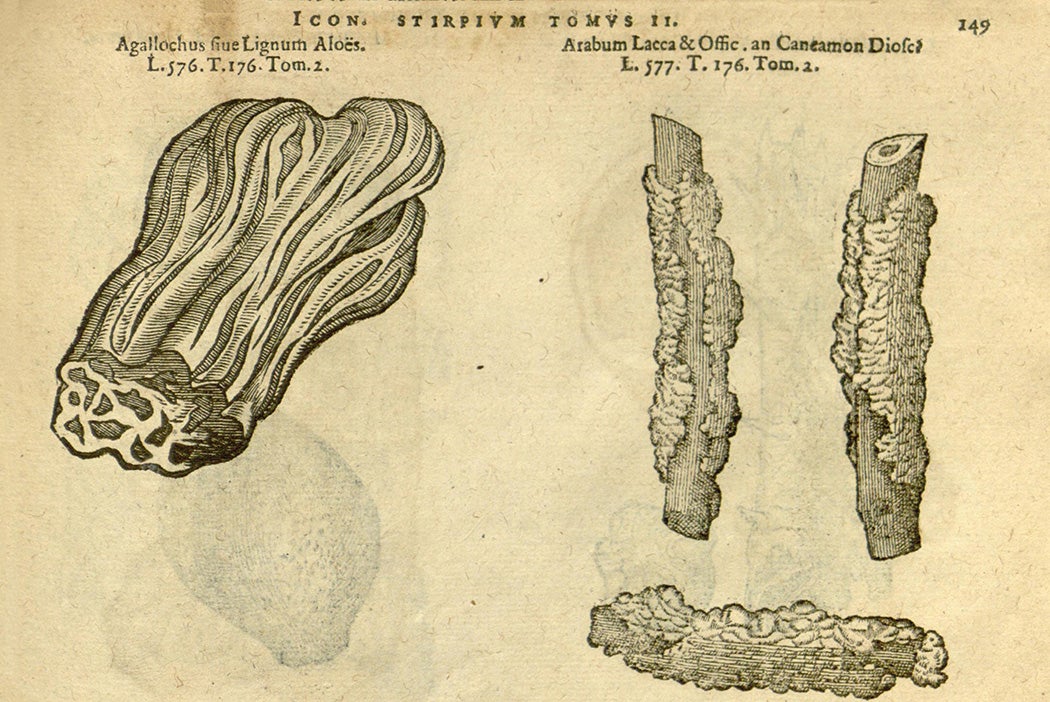
Agarwood (left), called Agallochus or Lignum Aloes in Mathias de l’Obel’s Icones Stripium, Seu Plantarum Tam Exoticarum, 1591, via the Missouri Botanical Garden. A copy is also held in the Dumbarton Oaks Rare Book Library.

Agarwood was prized well beyond early modern Italy. To quote the eighteenth-century British naturalist John Ellis, it had long been “precious in the East.” The earliest use of agarwood is recorded in the four Vedas of ancient India (approximately 1500–1000 B.C.E.). It was used as a religious offering as well as a fragrant smoke that was thought to facilitate spiritual connections. It was also used by the nobility to perfume their homes and signal wealth. From India, taste for and customs associated with agarwood traveled east and west along the Silk Road, an ancient network of trade and commerce that stretched from southern Europe to East Asia. As it traveled west, agarwood was incorporated into Christian and Islamic cultures as both medicine and incense and, by the time of the late Medici Court, also as an exotic object of natural history.

It was agarwood’s introduction to China and Japan, however, that would transform the fragrant substance into one of the world’s most prized and expensive woods for more than a millennium. Agarwood was first introduced to continental China from Southeast Asia sometime in the third century and was integrated into local incense and perfumery traditions. In southern China, agarwood was considered a prestigious luxury and quickly became an important import. Anthropologist Dinah Jung argues that the “gradual establishment of Buddhism in China supported the promotion of agarwood, since this movement generally emphasized the positive value of fragrance(s).” The rise of Buddhism only increased the significance of agarwood as incense became increasingly tied to religious practices. By the twelfth century, the value of agarwood had become equal to that of silver in southern China and across Southeast Asia.

Use of agarwood spread alongside Buddhism, and both reached Japan around the sixth century. By the eighth century, agarwood had become a crucial scent in Japanese incense ceremonies called kōdō. These elegant aristocratic rituals centered on enjoying, discerning, making, and judging the qualities of different aromatics. In Japan, there is even a large piece of ancient agarwood, called Ranjatai, that is still revered today; it is said to have been a gift from the Chinese to court to the Emperor Shômu (724–748 C.E.). Today Ranjatai is housed in the treasury of an important Buddhist temple and placed on display for special occasions.

Thanks to its rarity and inaccessibility, the odorous wood has a long history as a luxurious and spiritual substance. But in their natural state, the trees that produce agarwood are no more costly or desired than any other tree in South and Southeast Asia. The product of a microbial fungal infection, agarwood is actually a fragrant, dark, resinous wood formed in the heartwood of trees of the genus Aquilaria, which are native to the rainforests of Indonesia, Thailand, Cambodia, Laos, Vietnam, Malaysia, Northeast India, Bangladesh, the Philippines, Borneo, and New Guinea.

When a tree is injured or infected with fungus, an immune reaction sets in, producing stressed-induced aromatic resins, called aloes, in its heartwood. Over the course of several years, the aloes slowly embed in the heartwood, creating agarwood. The tree is then cut down and the pieces of agarwood are extracted by hand. In natural forests only 7 percent to 10 percent of Aquilaria trees become infected and produce agarwood. Unfortunately, without an experienced local specialist, the presence and quality of agarwood can only be assessed by felling the trees.

Making matters worse, demand for agarwood has increased over the past ten years, as the ancient scent has become newly fashionable in the international perfume industry. Pieces of agarwood are distilled into an essential oil, nicknamed liquid gold, to become a common ingredient in high-end perfumes. Increased demand for agarwood essential oil has led to not only an increase in prices and cultivation and a reduction in product quality, but also a heavy impact on Aquilaria populations.


  • Digg
  • Del.icio.us
  • StumbleUpon
  • Reddit
  • RSS