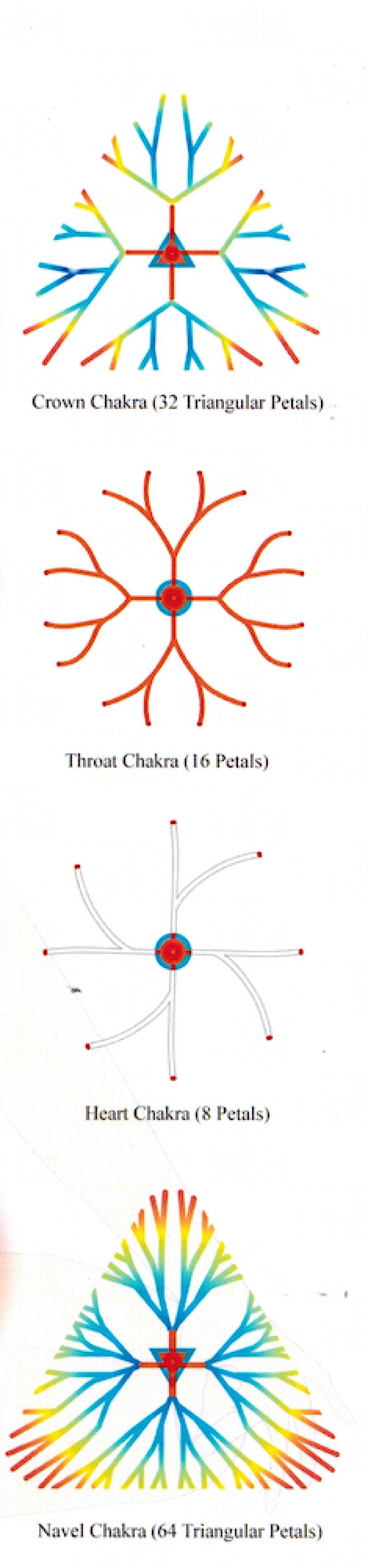
Chakras, Sanskrit: चक्र, romanized: cakra, lit. 'wheel, circle'; Pali: cakka) are various focal points used in a variety of ancient meditation practices, collectively denominated as Tantra, part of the inner traditions of Hinduism and Buddhism.
The concept of the chakra arose in Hinduism. Beliefs differ between the Indian religions, with many Buddhist texts consistently mentioning five chakras, while Hindu sources reference six or seven. Early Sanskrit texts speak of them both as meditative visualizations combining flowers and mantras and as physical entities in the body.Within Kundalini yoga, the techniques of breathing exercises, visualizations, mudras, bandhas, kriyas, and mantras are focused on manipulating the flow of subtle energy through chakras.
The modern "Western chakra system" arose from multiple sources, starting in the 1880s with H. P. Blavatsky and other Theosophists, followed by Sir John Woodroffe's 1919 book The Serpent Power, and Charles W. Leadbeater's 1927 book The Chakras. Psychological and other attributes, rainbow colours, and a wide range of supposed correspondences with other systems such as alchemy, astrology, gemstones, homeopathy, Kabbalah and Tarot were added later.
Lexically, chakra is the Indic reflex of an ancestral Indo-European form *kʷékʷlos, whence also "wheel" and "cycle" (Ancient Greek: κύκλος, romanized: kýklos). It has both literal and metaphorical uses, as in the "wheel of time" or "wheel of dharma", such as in Rigveda hymn verse 1.164.11 pervasive in the earliest Vedic texts.
In Buddhism, especially in Theravada, the Pali noun cakka connotes "wheel". Within the Buddhist scriptures refferred to as the Tripitaka, Shakyamuni Buddha variously refers the "dhammacakka", or "wheel of dharma", connoting that this dharma, universal in its advocacy, should bear the marks characteristic of any temporal dispensation. Shakyamuni Buddha spoke of freedom from cycles in and of themselves, whether karmic, reincarnative, liberative, cognitive or emotional.
In Jainism, the term chakra also means "wheel" and appears in various contexts in its ancient literature. As in other Indian religions, chakra in esoteric theories in Jainism such as those by Buddhisagarsuri means a yogic energy center.
The word chakra appears to first emerge within the Vedas, though not in the sense of psychic energy centers, rather as chakravartin or the king who "turns the wheel of his empire" in all directions from a center, representing his influence and power. The iconography popular in representing the Chakras, states the scholar David Gordon White, traces back to the five symbols of yajna, the Vedic fire altar: "square, circle, triangle, half moon and dumpling".
The hymn 10.136 of the Rigveda mentions a renunciate yogi with a female named kunannamā. Literally, it means "she who is bent, coiled", representing both a minor goddess and one of many embedded enigmas and esoteric riddles within the Rigveda. Some scholars, such as D.G. White and Georg Feuerstein, have suggested that she may be a reference to kundalini shakti and a precursor to the terminology associated with the chakras in later tantric traditions.
Breath channels (nāḍi) are mentioned in the classical Upanishads of Hinduism from the 1st millennium BCE, but not psychic-energy chakra theories. Three classical Nadis are Ida, Pingala and Sushumna in which the central channel Sushumna is said to be foremost as per Kṣurikā-Upaniṣhad. The latter, states David Gordon White, were introduced about 8th-century CE in Buddhist texts as hierarchies of inner energy centers, such as in the Hevajra Tantra and Caryāgiti. These are called by various terms such as cakka, padma (lotus) or pitha (mound). These medieval Buddhist texts mention only four chakras, while later Hindu texts such as the Kubjikāmata and Kaulajñānanirnaya expanded the list to many more.
In contrast to White, according to Feuerstein, early Upanishads of Hinduism do mention chakras in the sense of "psychospiritual vortices", along with other terms found in tantra: prana or vayu (life energy) along with nadi (energy carrying arteries). According to Gavin Flood, the ancient texts do not present chakra and kundalini-style yoga theories although these words appear in the earliest Vedic literature in many contexts. The chakra in the sense of four or more vital energy centers appear in the medieval era Hindu and Buddhist texts.
The Chakras are part of esoteric ideas and concepts about physiology and psychic centers that emerged across Indian traditions. The belief held that human life simultaneously exists in two parallel dimensions, one "physical body" (sthula sarira) and other "psychological, emotional, mind, non-physical" it is called the "subtle body" (sukshma sarira).This subtle body is energy, while the physical body is mass. The psyche or mind plane corresponds to and interacts with the body plane, and the belief holds that the body and the mind mutually affect each other. The subtle body consists of nadi (energy channels) connected by nodes of psychic energy called chakra. The belief grew into extensive elaboration, with some suggesting 88,000 chakras throughout the subtle body. The number of major chakras varied between various traditions, but they typically ranged between four and seven. Nyingmapa Vajrayana Buddhist teachings mention eight chakras and there is a complete yogic system for each of them.
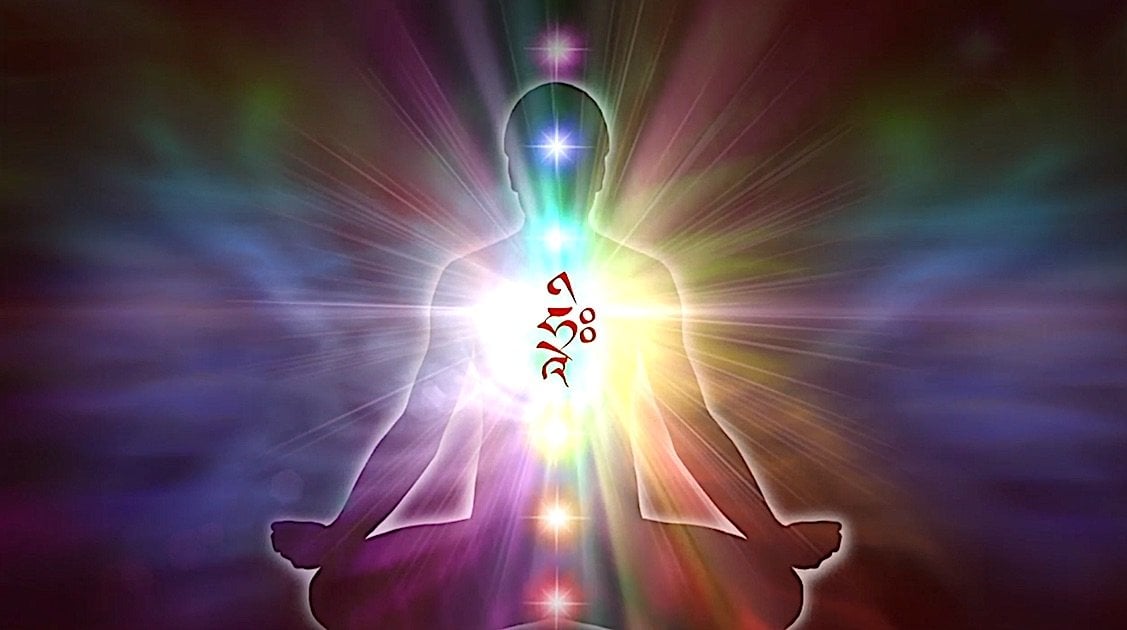
The important chakras are stated in Hindu and Buddhist texts to be arranged in a column along the spinal cord, from its base to the top of the head, connected by vertical channels. The tantric traditions sought to master them, awaken and energize them through various breathing exercises or with assistance of a teacher. These chakras were also symbolically mapped to specific human physiological capacity, seed syllables (bija), sounds, subtle elements (tanmatra), in some cases deities, colors and other motifs.
Belief in the chakra system of Hinduism and Buddhism differs from the historic Chinese system of meridians in acupuncture.[6] Unlike the latter, the chakra relates to subtle body, wherein it has a position but no definite nervous node or precise physical connection. The tantric systems envision it as continually present, highly relevant and a means to psychic and emotional energy. It is useful in a type of yogic rituals and meditative discovery of radiant inner energy (prana flows) and mind-body connections. The meditation is aided by extensive symbology, mantras, diagrams, models (deity and mandala). The practitioner proceeds step by step from perceptible models, to increasingly abstract models where deity and external mandala are abandoned, inner self and internal mandalas are awakened.
These ideas are not unique to Hindu and Buddhist traditions. Similar and overlapping concepts emerged in other cultures in the East and the West, and these are variously called by other names such as subtle body, spirit body, esoteric anatomy, sidereal body and etheric body. According to Geoffrey Samuel and Jay Johnston, professors of Religious studies known for their studies on Yoga and esoteric traditions:
Ideas and practices involving so-called 'subtle bodies' have existed for many centuries in many parts of the world. (...) Virtually all human cultures known to us have some kind of concept of mind, spirit or soul as distinct from the physical body, if only to explain experiences such as sleep and dreaming. (...) An important subset of subtle-body practices, found particularly in Indian and Tibetan Tantric traditions, and in similar Chinese practices, involves the idea of an internal 'subtle physiology' of the body (or rather of the body-mind complex) made up of channels through which substances of some kind flow, and points of intersection at which these channels come together. In the Indian tradition the channels are known as nadi and the points of intersection as cakra.
— Geoffrey Samuel and Jay Johnston, Religion and the Subtle Body in Asia and the West: Between Mind and Body
Number of chakras
There is no consensus in Hinduism about the number of chakras because the concept of chakras has been evolved and interpreted differently by various sects, schools of thought, and spiritual traditions within Hinduism over the centuries. While some traditions follow the seven main chakra system, others recognize additional chakras or a different number of chakras. The lack of a universally accepted standard has led to variation and diversity in the interpretation and understanding of chakras within Hinduism. There are several sects within Hinduism that have their own unique interpretations and understandings of the concept of chakras. Here are some of the major sects that have different perspectives on chakras:
Bhakti Yoga: In Bhakti Yoga, the number of chakras varies, but the focus is often on the heart chakra as the center of spiritual devotion.
Ayurveda (3): In Ayurveda, there are three main chakras, known as the "Marmas," which are considered to be the focal points of the physical, mental, and spiritual energies in the body.
Shaivism (5): In Shaivism, there are five chakras, with the focus being on the heart and crown chakras.
Tantra (6): In Tantra, there are traditionally said to be four to six chakras, with the crown chakra being considered the highest.
Kashmir Shaivism (6–7): In Kashmir Shaivism, there are six or seven chakras, with the focus being on the awakening of the divine energy within.
Hatha Yoga (7): In Hatha Yoga, there are seven main chakras, but some Hatha Yoga traditions also recognize additional chakras.
Kundalini Yoga (7): In Kundalini Yoga, there are seven main chakras, but additional minor chakras are also recognized.
Nath Tradition (8): In the Nath tradition, there are eight main chakras, with the emphasis being on the awakening of the divine energy through these centers.
Vaishnavism (12): In Vaishnavism, there are twelve chakras, with the emphasis being on the spiritual ascent through these centers.
The classical eastern traditions, particularly those that developed in India during the 1st millennium AD, primarily describe nadi and chakra in a "subtle body" context. To them, they are in same dimension as of the psyche-mind reality that is invisible yet real. In the nadi and cakra flow the prana (breath, life energy). The concept of "life energy" varies between the texts, ranging from simple inhalation-exhalation to far more complex association with breath-mind-emotions-sexual energy. This prana or essence is what vanishes when a person dies, leaving a gross body. Some of this concept states this subtle body is what withdraws within, when one sleeps. All of it is believed to be reachable, awake-able and important for an individual's body-mind health, and how one relates to other people in one's life. This subtle body network of nadi and chakra is, according to some later Indian theories and many New Age speculations, closely associated with emotions.
Hindu tantra
Main article: Kundalini energy
Esoteric traditions in Hinduism mention numerous numbers and arrangements of chakras, of which a classical system of six-plus-one, the last being the Sahasrara, is most prevalent. This seven-part system, central to the core texts of hatha yoga, is one among many systems found in Hindu tantric literature. Hindu Tantra associates six Yoginis with six places in the subtle body, corresponding to the six chakras of the six-plus-one system.
Association of six yoginis with chakra locations in the Rudrayamala Tantra
Place in subtle body Yogini
1. Muladhara Dakini
2. Svadhisthana Rakini
3. Manipura Lakini
4. Anahata Kakini
5. Vishuddhi Shakini
6. Ajna Hakini
The Chakra methodology is extensively developed in the goddess tradition of Hinduism called Shaktism. It is an important concept along with yantras, mandalas and kundalini yoga in its practice. Chakra in Shakta tantrism means circle, an "energy center" within, as well as being a term for group rituals such as in chakra-puja (worship within a circle) which may or may not involve tantra practice. The cakra-based system is a part of the meditative exercises that came to be known as yoga.
Buddhist tantra
Main article: Vajrayana
The esoteric traditions in Buddhism generally teach four chakras. In some early Buddhist sources, these chakras are identified as: manipura (navel), anahata (heart), vishuddha (throat) and ushnisha kamala (crown). In one development within the Nyingma lineage of the Mantrayana of Tibetan Buddhism a popular conceptualization of chakras in increasing subtlety and increasing order is as follows: Nirmanakaya (gross self), Sambhogakaya (subtle self), Dharmakaya (causal self), and Mahasukhakaya (non-dual self), each vaguely and indirectly corresponding to the categories within the Shaiva Mantramarga universe, i.e., Svadhisthana, Anahata, Visuddha, Sahasrara, etc. However, depending on the meditational tradition, these vary between three and six. The chakras are considered psycho-spiritual constituents, each bearing meaningful correspondences to cosmic processes and their postulated Buddha counterpart.
A system of five chakras is common among the Mother class of Tantras and these five chakras along with their correspondences are:
Basal chakra (Element: Earth, Buddha: Amoghasiddhi, Bija mantra: LAM)
Abdominal chakra (Element: Water, Buddha: Ratnasambhava, Bija mantra: VAM)
Heart chakra (Element: Fire, Buddha: Akshobhya, Bija mantra: RAM)
Throat chakra (Element: Wind, Buddha: Amitabha, Bija mantra: YAM)
Crown chakra (Element: Space, Buddha: Vairochana, Bija mantra: KHAM)
Chakras clearly play a key role in Tibetan Buddhism, and are considered to be the pivotal providence of Tantric thinking. And, the precise use of the chakras across the gamut of tantric sadhanas gives little space to doubt the primary efficacy of Tibetan Buddhism as distinct religious agency, that being that precise revelation that, without Tantra there would be no Chakras, but more importantly, without Chakras, there is no Tibetan Buddhism. The highest practices in Tibetan Buddhism point to the ability to bring the subtle pranas of an entity into alignment with the central channel, and to thus penetrate the realisation of the ultimate unity, namely, the "organic harmony" of one's individual consciousness of Wisdom with the co-attainment of All-embracing Love, thus synthesizing a direct cognition of absolute Buddhahood
According to Samuel, the buddhist esoteric systems developed cakra and nadi as "central to their soteriological process". The theories were sometimes, but not always, coupled with a unique system of physical exercises, called yantra yoga or 'phrul 'khor. Chakras, according to the Bon tradition, enable the gestalt of experience, with each of the five major chakras, being psychologically linked with the five experiential qualities of unenlightened consciousness, the six realms of woe.
The tsa lung practice embodied in the Trul khor lineage, unbaffles the primary channels, thus activating and circulating liberating prana. Yoga awakens the deep mind, thus bringing forth positive attributes, inherent gestalts, and virtuous qualities. In a computer analogy, the screen of one's consciousness is slated and an attribute-bearing file is called up that contains necessary positive or negative, supportive qualities. Tantric practice is said to eventually transform all experience into clear light. The practice aims to liberate from all negative conditioning, and the deep cognitive salvation of freedom from control and unity of perception and cognition.
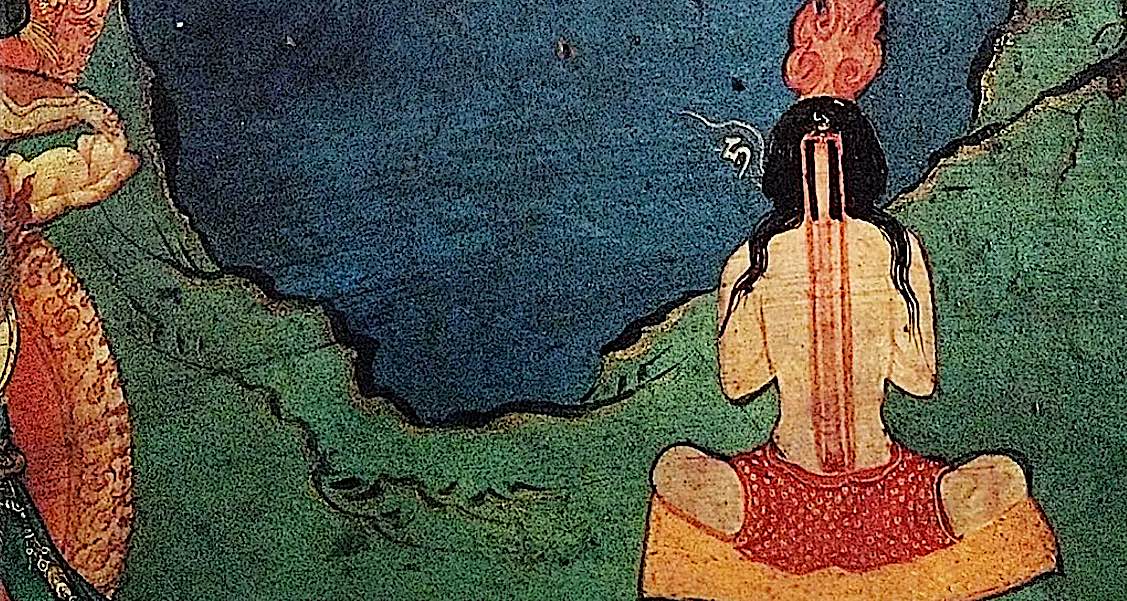
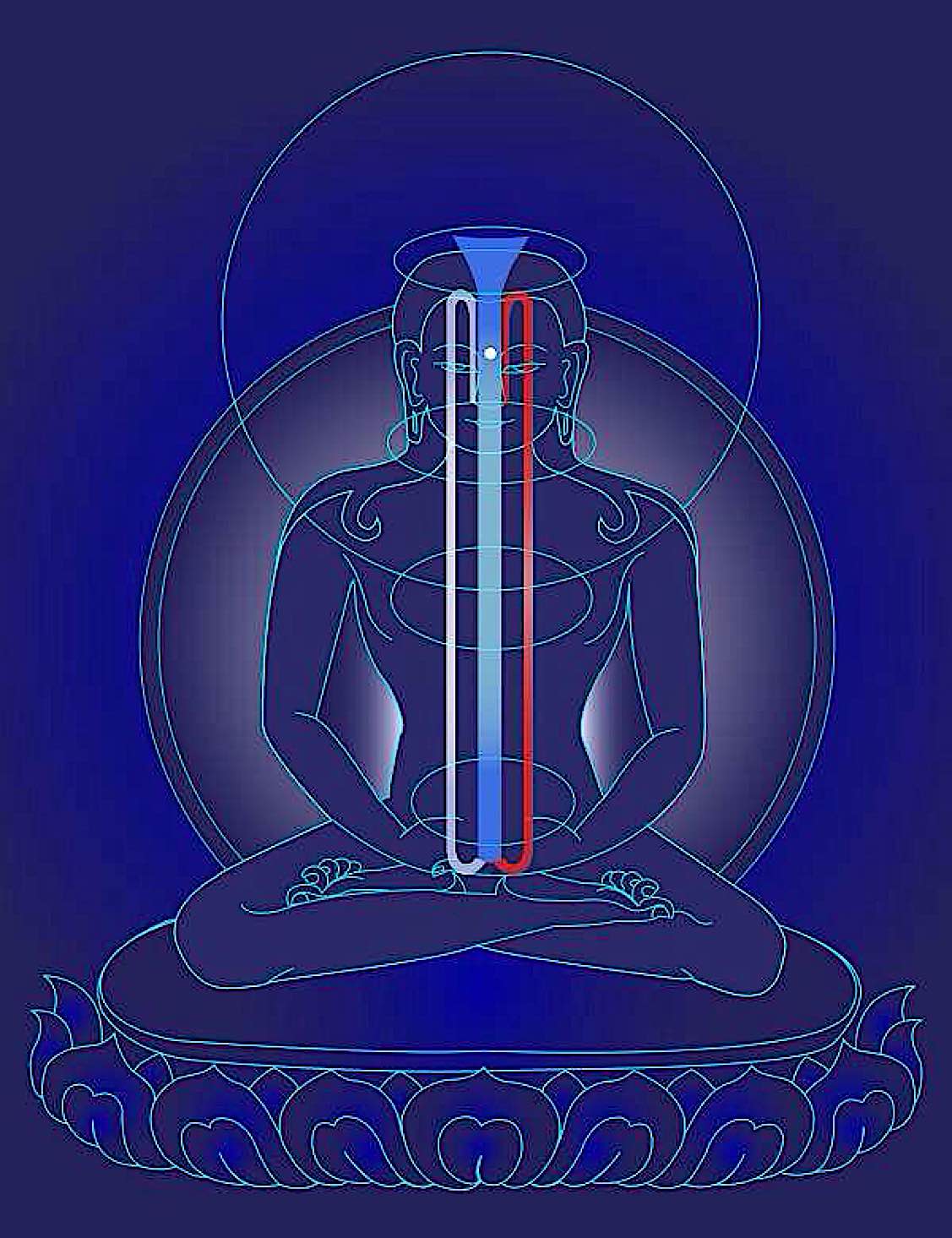
A Tibetan illustration of the subtle body showing the central channel, two side channels, and five chakras
A Tibetan thangka showing six chakras
Seven chakra system
The most studied chakra system incorporates six major chakras along with a seventh centre generally not regarded as a chakra. These points are arranged vertically along the axial channel (sushumna nadi in Hindu texts, Avadhuti in some Buddhist texts). According to Gavin Flood, this system of six chakras plus the sahasrara "center" at the crown first appears in the Kubjikāmata-tantra, an 11th-century Kaula work.
It was this chakra system that was translated in the early 20th century by Sir John Woodroffe (also called Arthur Avalon) in his book The Serpent Power. Avalon translated the Hindu text Ṣaṭ-Cakra-Nirūpaṇa meaning the examination (nirūpaṇa) of the six (ṣaṭ) chakras (cakra).
The Chakras are traditionally considered meditation aids. The yogi progresses from lower chakras to the highest chakra blossoming in the crown of the head, internalizing the journey of spiritual ascent.[60] In both the Hindu kundalini and Buddhist candali traditions, the chakras are pierced by a dormant energy residing near or in the lowest chakra. In Hindu texts she is known as Kundalini, while in Buddhist texts she is called Candali or Tummo (Tibetan: gtum mo, "fierce one").
Below are the common new age description of these six chakras and the seventh point known as sahasrara. This new age version incorporates the Newtonian colours of the rainbow not found in any ancient Indian system.
One schema of seven chakras is as follows, from bottom to top: 1. Muladhara 2. Svadhisthana 3. Manipura 4. Anahata 5. Vishuddhi 6. Ajna 7. Sahasrara. The colours are modern
New age descriptions of the chakras
Sahasrara
Sahasrara (Sanskrit: सहस्रार, IAST: Sahasrāra, English: "thousand-petalled", with many alternative names and spellings)
"Thousand-petaled" Crown 1000 White or Violet -
Mantra & element: Time & Space , Divine Consciousness
Highest spiritual centre, pure consciousness, containing neither object nor subject. When the feminine Kundalini Shakti rises to this point, it unites with the masculine Shiva, giving self-realization and samadhi. In esoteric Buddhism, it is called Mahasukha, the petal lotus of "Great Bliss" corresponding to the fourth state of Four Noble Truths.
Hatha yoga
Image of a Sahasrara Chakra with 1000 petals, in 20 layers of 50 petals each.
The Sahasrara is described in a few medieval hatha yoga texts including the Śivasaṃhitā and the Tirumantiram, but not within the Paścimāmnāya and Nath traditions; the Kubjikamatatantra describes only the six lower chakras. The scriptures vary in the position of the Sahasrara; the Shiva Samhita states that it is beyond the body, whereas others place it at the fontanelle or brahmarandhra on the top of the head where the soul leaves the body at death.
The Sahasrara is described as a lotus flower with 1,000 petals of different colors. These are arranged in 20 layers, each with approximately 50 petals. The pericarp is golden and within it a circular moon region is inscribed with a luminous triangle, which can be either upward- or downward-pointing.
Function
Often referred to as a thousand-petaled lotus, it is said to be the most subtle chakra in the system, relating to pure consciousness, and it is from this chakra that all the other chakras emanate. When a yogi is able to raise their kundalini (energy of consciousness) up to this point, the state of Nirvikalpa Samādhi is experienced.
Practices
Exercises for the Sahasrāra Chakra are:
Shirshasana
Vrikshasana
Khatu Pranam
Chanting Om
Kriya Yoga
There are also special Meditations on the Sahasrāra Chakra.

Ajna or Agya आज्ञा
Position: Between eyebrows
No. of petals: 2
Modern colour: Indigo
Mantra & element: Om (Light Or Darkness)
Guru chakra, or in New Age usage third-eye chakra, the subtle center of energy, where the tantra guru touches the seeker during the initiation ritual. He or she commands the awakened kundalini to pass through this centre.
Corresponds to the upper dantien in the Qigong system.
Vishuddha
Position: Throw
No. of petals:: 16
Modern colour: Blue
Mantra & element: Ham (space)
16 petals covered with the sixteen Sanskrit vowels. Associated with the element of space (akasha). The residing deity is Panchavaktra shiva, with 5 heads and 4 arms, and the Shakti is Shakini.
In esoteric Buddhism, it is called Sambhoga and is generally considered to be the petal lotus of "Enjoyment" corresponding to the third state of Four Noble Truths.
Anahata
Position: Heart
No. of petals:: 12
Modern colour: Green
Mantra & element: Yam (Air)
Within it is a yantra of two intersecting triangles, forming a hexagram, symbolising a union of the male and female, and the element of air (vayu). The presiding deity is Ishana Rudra Shiva, and the Shakti is Kakini.
In esoteric Buddhism, this Chakra is called Dharma and is generally considered to be the petal lotus of "Essential nature" and corresponding to the second state of Four Noble Truths.
Corresponds to the middle dantien in the Qigong system.
Manipura
Charkra: Manipura
Position: Navel
No. of petals:: 10
Modern colour: Yellow
Mantra & element: Ram (Fire)
For the Nath yogi meditation system, this is described as the Madhyama-Shakti or the intermediate stage of self-discovery. This chakra is represented as a downward pointing triangle representing fire in the middle of a lotus with ten petals. The presiding deity is Braddha Rudra, with Lakini as the Shakti.
Svadhishthana
Charkra: Svadhishthana
Position: Root of sexual organs
No. of petals:: 6
Modern colour: Orange
Mantra & element: Vam (Water)
Svadhisthana is represented with a lotus within which is a crescent moon symbolizing the water element. The presiding deity is Brahma, with the Shakti being Rakini (or Chakini).
In esoteric Buddhism, it is called Nirmana, the petal lotus of "Creation" and corresponding to the first state of Four Noble Truths.Corresponds to the lower dantien in the Qigong system.
Muladhara
Charkra: Muladhara
Position: Base of spine
No. of petals:: 4
Modern colour: Red
Mantra & element: Lam (Earth)
Dormant Kundalini is often said to be resting here, wrapped three and a half, or seven or twelve times. Sometimes she is wrapped around the black Svayambhu linga, the lowest of three obstructions to her full rising (also known as knots or granthis). It is symbolised as a four-petaled lotus with a yellow square at its center representing the element of earth.
The seed syllable is Lam for the earth element. All sounds, words and mantras in their dormant form rest in the muladhara chakra, where Ganesha resides, while the Shakti is Dakini. The associated animal is the elephant
-----------------------------------------------------*****---------------------------------------------------------
Luân xa, tiếng Phạn: चक्र, chuyển tự: cakra, nghĩa đen là 'bánh xe, vòng tròn'; tiếng Pali: cakka) là nhiều điểm hội tụ khác nhau được sử dụng trong nhiều phương pháp thiền cổ xưa, được gọi chung là Tantra, một phần của truyền thống bên trong của Ấn Độ giáo và Phật giáo.
Khái niệm về luân xa xuất hiện trong Ấn Độ giáo. Niềm tin khác nhau giữa các tôn giáo Ấn Độ, với nhiều văn bản Phật giáo liên tục đề cập đến năm luân xa, trong khi các nguồn Ấn Độ giáo đề cập đến sáu hoặc bảy luân xa. Các văn bản tiếng Phạn ban đầu nói về chúng vừa là hình ảnh thiền kết hợp hoa và thần chú vừa là các thực thể vật lý trong cơ thể. Trong Kundalini yoga, các kỹ thuật của các bài tập thở, hình ảnh hóa, mudra, bandha, kriyas và thần chú tập trung vào việc điều khiển dòng năng lượng tinh tế qua các luân xa.
"Hệ thống luân xa phương Tây" hiện đại xuất phát từ nhiều nguồn, bắt đầu từ những năm 1880 với H. P. Blavatsky và những nhà Thông Thiên Học khác, tiếp theo là cuốn sách The Serpent Power năm 1919 của Sir John Woodroffe và cuốn sách The Chakras năm 1927 của Charles W. Leadbeater. Các thuộc tính tâm lý và các thuộc tính khác, màu sắc cầu vồng và nhiều sự tương ứng được cho là có với các hệ thống khác như thuật giả kim, chiêm tinh học, đá quý, liệu pháp vi lượng đồng căn, Kabbalah và Tarot được thêm vào sau đó.
Về mặt từ vựng, chakra là phản xạ Ấn Độ của dạng tổ tiên Ấn-Âu *kʷékʷlos, do đó cũng có "bánh xe" và "chu kỳ" (tiếng Hy Lạp cổ: κύκλος, chuyển tự: kýklos). Nó có cả nghĩa đen và nghĩa bóng, như trong "bánh xe thời gian" hoặc "bánh xe pháp", chẳng hạn như trong câu thánh ca Rigveda 1.164.11 phổ biến trong các văn bản Vệ Đà sớm nhất.
Trong Phật giáo, đặc biệt là trong Theravada, danh từ Pali cakka có nghĩa là "bánh xe". Trong các kinh Phật được gọi là Tripitaka, Đức Phật Thích Ca Mâu Ni có nhiều cách gọi khác nhau là "dhammacakka", hay "bánh xe pháp", ám chỉ rằng pháp này, có tính phổ quát trong sự ủng hộ của nó, nên mang những dấu hiệu đặc trưng của bất kỳ sự phân chia thời gian nào. Đức Phật Thích Ca Mâu Ni đã nói về sự giải thoát khỏi các chu kỳ trong và của chính chúng, cho dù là nghiệp chướng, luân hồi, giải thoát, nhận thức hay cảm xúc.
Trong đạo Jain, thuật ngữ chakra cũng có nghĩa là "bánh xe" và xuất hiện trong nhiều bối cảnh khác nhau trong văn học cổ đại. Giống như các tôn giáo Ấn Độ khác, chakra trong các lý thuyết bí truyền trong đạo Jain như của Buddhisagarsuri có nghĩa là trung tâm năng lượng yoga.
Từ chakra dường như xuất hiện lần đầu tiên trong kinh Vệ Đà, mặc dù không theo nghĩa là các trung tâm năng lượng tâm linh, mà là chakravartin hoặc vị vua "quay bánh xe đế chế của mình" theo mọi hướng từ một trung tâm, tượng trưng cho ảnh hưởng và quyền lực của ông. Học giả David Gordon White cho biết biểu tượng phổ biến trong việc tượng trưng cho các luân xa có nguồn gốc từ năm biểu tượng của yajna, bàn thờ lửa Vệ Đà: "hình vuông, hình tròn, hình tam giác, hình bán nguyệt và hình bánh bao".
Bài thánh ca 10.136 của Rigveda đề cập đến một yogi từ bỏ với một người phụ nữ tên là kunannamā. Theo nghĩa đen, nó có nghĩa là "người uốn cong, cuộn tròn", tượng trưng cho cả một nữ thần nhỏ và một trong nhiều câu đố và câu đố bí truyền được nhúng trong Rigveda. Một số học giả, chẳng hạn như D.G. White và Georg Feuerstein, đã gợi ý rằng cô ấy có thể là một tham chiếu đến kundalini shakti và là tiền thân của thuật ngữ liên quan đến luân xa trong các truyền thống tantra sau này.
Các kênh hơi thở (nāḍi) được đề cập trong Upanishads cổ điển của Ấn Độ giáo từ thiên niên kỷ thứ 1 trước Công nguyên, nhưng không phải là các lý thuyết về luân xa năng lượng tâm linh. Ba Nadi cổ điển là Ida, Pingala và Sushumna trong đó kênh trung tâm Sushumna được cho là quan trọng nhất theo Kṣurikā-Upaniṣhad. David Gordon White cho biết, sau này đã được giới thiệu vào khoảng thế kỷ thứ 8 sau Công nguyên trong các văn bản Phật giáo như các hệ thống phân cấp của các trung tâm năng lượng bên trong, chẳng hạn như trong Hevajra Tantra và Caryāgiti. Chúng được gọi bằng nhiều thuật ngữ khác nhau như cakka, padma (hoa sen) hoặc pitha (gò). Các văn bản Phật giáo thời trung cổ này chỉ đề cập đến bốn luân xa, trong khi các văn bản Ấn Độ giáo sau này như Kubjikāmata và Kaulajñānanirnaya đã mở rộng danh sách này thành nhiều luân xa hơn nữa.
Ngược lại với White, theo Feuerstein, Upanishads đầu tiên của Ấn Độ giáo có đề cập đến luân xa theo nghĩa "xoáy tâm linh", cùng với các thuật ngữ khác được tìm thấy trong tantra: prana hoặc vayu (năng lượng sống) cùng với nadi (động mạch mang năng lượng). Theo Gavin Flood, các văn bản cổ không trình bày các lý thuyết yoga theo phong cách luân xa và kundalini mặc dù những từ này xuất hiện trong các tài liệu Vệ Đà sớm nhất trong nhiều bối cảnh. Luân xa theo nghĩa là bốn hoặc nhiều trung tâm năng lượng quan trọng xuất hiện trong các văn bản Ấn Độ giáo và Phật giáo thời trung cổ.
Luân xa là một phần của các ý tưởng và khái niệm bí truyền về sinh lý học và các trung tâm tâm linh xuất hiện trong các truyền thống Ấn Độ. Niềm tin cho rằng cuộc sống con người đồng thời tồn tại trong hai chiều song song, một "cơ thể vật chất" (sthula sarira) và "cơ thể tâm lý, cảm xúc, tâm trí, phi vật chất" khác được gọi là "cơ thể vi tế" (sukshma sarira). Cơ thể vi tế này là năng lượng, trong khi cơ thể vật chất là khối lượng. Tâm lý hoặc mặt phẳng tâm trí tương ứng và tương tác với mặt phẳng cơ thể, và niềm tin cho rằng cơ thể và tâm trí ảnh hưởng lẫn nhau. Cơ thể vi tế bao gồm các nadi (kênh năng lượng) được kết nối bởi các nút năng lượng tâm linh được gọi là luân xa. Niềm tin phát triển thành sự giải thích sâu rộng, với một số gợi ý 88.000 luân xa trên khắp cơ thể vi tế. Số lượng luân xa chính thay đổi tùy theo các truyền thống khác nhau, nhưng chúng thường dao động trong khoảng từ bốn đến bảy. Giáo lý Phật giáo Nyingmapa Vajrayana đề cập đến tám luân xa và có một hệ thống yoga hoàn chỉnh cho mỗi luân xa.
Các luân xa quan trọng được nêu trong các văn bản Ấn Độ giáo và Phật giáo được sắp xếp theo cột dọc theo tủy sống, từ gốc đến đỉnh đầu, được kết nối bằng các kênh dọc. Các truyền thống Mật tông tìm cách làm chủ chúng, đánh thức và tiếp thêm năng lượng cho chúng thông qua các bài tập thở khác nhau hoặc với sự hỗ trợ của một giáo viên. Các luân xa này cũng được biểu tượng hóa thành khả năng sinh lý cụ thể của con người, âm tiết hạt giống (bija), âm thanh, các yếu tố tinh tế (tanmatra), trong một số trường hợp là các vị thần, màu sắc và các họa tiết khác.
Niềm tin vào hệ thống luân xa của Ấn Độ giáo và Phật giáo khác với hệ thống kinh tuyến trong châm cứu của Trung Quốc cổ đại. Không giống như sau này, luân xa liên quan đến cơ thể tinh tế, trong đó nó có một vị trí nhưng không có nút thần kinh xác định hoặc kết nối vật lý chính xác. Các hệ thống Mật tông hình dung nó liên tục hiện diện, có liên quan cao và là phương tiện để truyền năng lượng tâm linh và cảm xúc. Nó hữu ích trong một loại nghi lễ yoga và khám phá thiền định về năng lượng bên trong rạng rỡ (dòng chảy prana) và kết nối giữa tâm trí và cơ thể. Thiền được hỗ trợ bởi biểu tượng học, thần chú, sơ đồ, mô hình (thần và mandala) mở rộng. Người thực hành tiến từng bước từ các mô hình có thể nhận thức được, đến các mô hình ngày càng trừu tượng hơn, nơi thần và mandala bên ngoài bị bỏ rơi, bản ngã bên trong và mandala bên trong được đánh thức.
Những ý tưởng này không chỉ có trong các truyền thống Ấn Độ giáo và Phật giáo. Các khái niệm tương tự và chồng chéo đã xuất hiện trong các nền văn hóa khác ở phương Đông và phương Tây, và chúng được gọi bằng nhiều tên khác nhau như thể tinh tế, thể tinh thần, giải phẫu bí truyền, thể thiên văn và thể etheric. Theo Geoffrey Samuel và Jay Johnston, các giáo sư nghiên cứu tôn giáo nổi tiếng với các nghiên cứu về Yoga và các truyền thống bí truyền:
Những ý tưởng và thực hành liên quan đến cái gọi là 'thể tinh tế' đã tồn tại trong nhiều thế kỷ ở nhiều nơi trên thế giới. (...) Hầu như tất cả các nền văn hóa của con người mà chúng ta biết đều có một số khái niệm về tâm trí, tinh thần hoặc linh hồn khác biệt với cơ thể vật lý, nếu chỉ để giải thích những trải nghiệm như ngủ và mơ. (...) Một tập hợp con quan trọng của các thực hành thể tinh tế, đặc biệt được tìm thấy trong các truyền thống Mật tông Ấn Độ và Tây Tạng, và trong các thực hành tương tự của Trung Quốc, liên quan đến ý tưởng về 'sinh lý học tinh tế' bên trong của cơ thể (hay đúng hơn là phức hợp cơ thể-tâm trí) bao gồm các kênh mà các chất nào đó chảy qua và các điểm giao nhau mà các kênh này gặp nhau. Trong truyền thống Ấn Độ, các kênh được gọi là nadi và các điểm giao nhau là cakra.
— Geoffrey Samuel và Jay Johnston, Tôn giáo và Thể tinh tế ở Châu Á và Phương Tây: Giữa Tâm trí và Cơ thể
Số lượng luân xa
Không có sự thống nhất trong Ấn Độ giáo về số lượng luân xa vì khái niệm luân xa đã được phát triển và diễn giải khác nhau bởi nhiều giáo phái, trường phái tư tưởng và truyền thống tâm linh trong Ấn Độ giáo qua nhiều thế kỷ. Trong khi một số truyền thống tuân theo hệ thống bảy luân xa chính, những truyền thống khác lại công nhận các luân xa bổ sung hoặc số lượng luân xa khác nhau. Việc thiếu một tiêu chuẩn được chấp nhận rộng rãi đã dẫn đến sự khác biệt và đa dạng trong cách diễn giải và hiểu biết về luân xa trong Ấn Độ giáo. Có một số giáo phái trong Ấn Độ giáo có cách diễn giải và hiểu biết riêng về khái niệm luân xa. Sau đây là một số giáo phái chính có quan điểm khác nhau về luân xa:
Bhakti Yoga: Trong Bhakti Yoga, số lượng luân xa thay đổi, nhưng trọng tâm thường là luân xa tim như là trung tâm của sự sùng kính tâm linh.
Ayurveda (3): Trong Ayurveda, có ba luân xa chính, được gọi là "Marmas", được coi là điểm hội tụ của năng lượng vật lý, tinh thần và tâm linh trong cơ thể.
Shaivism (5): Trong Shaivism, có năm luân xa, tập trung vào luân xa tim và luân xa đỉnh đầu.
Tantra (6): Trong Tantra, theo truyền thống, người ta cho rằng có bốn đến sáu luân xa, trong đó luân xa đỉnh đầu được coi là cao nhất.
Kashmir Shaivism (6–7): Trong Kashmir Shaivism, có sáu hoặc bảy luân xa, tập trung vào sự thức tỉnh của năng lượng thiêng liêng bên trong.
Hatha Yoga (7): Trong Hatha Yoga, có bảy luân xa chính, nhưng một số truyền thống Hatha Yoga cũng công nhận các luân xa bổ sung.
Kundalini Yoga (7): Trong Kundalini Yoga, có bảy luân xa chính, nhưng các luân xa phụ bổ sung cũng được công nhận.
Truyền thống Nath (8): Trong truyền thống Nath, có tám luân xa chính, tập trung vào sự thức tỉnh của năng lượng thiêng liêng thông qua các trung tâm này.
Vaishnavism (12): Trong Vaishnavism, có mười hai luân xa, tập trung vào sự thăng hoa về mặt tinh thần thông qua các trung tâm này.
Các truyền thống phương Đông cổ điển, đặc biệt là những truyền thống phát triển ở Ấn Độ trong thiên niên kỷ thứ nhất sau Công nguyên, chủ yếu mô tả nadi và luân xa trong bối cảnh "cơ thể vi tế". Đối với họ, chúng ở cùng một chiều với thực tại tâm lý-tâm trí vô hình nhưng có thật. Trong nadi và luân xa, prana (hơi thở, năng lượng sống) chảy. Khái niệm "năng lượng sống" khác nhau giữa các văn bản, từ hít vào-thở ra đơn giản đến sự liên kết phức tạp hơn nhiều với hơi thở-tâm trí-cảm xúc-năng lượng tình dục. Prana hay bản chất này là thứ biến mất khi một người chết, để lại một cơ thể thô. Một số khái niệm này nêu rằng cơ thể vi tế này là thứ rút lui vào bên trong, khi một người ngủ. Tất cả những thứ này được cho là có thể tiếp cận, có thể thức tỉnh và quan trọng đối với sức khỏe cơ thể-tâm trí của một cá nhân, và cách một người liên hệ với những người khác trong cuộc sống của mình. Mạng lưới cơ thể vi tế này của nadi và luân xa, theo một số lý thuyết Ấn Độ sau này và nhiều suy đoán của Thời đại mới, có liên quan chặt chẽ với cảm xúc
Mật tông Hindu
Bài viết chính: Năng lượng Kundalini
Các truyền thống bí truyền trong Ấn Độ giáo đề cập đến nhiều con số và cách sắp xếp luân xa, trong đó hệ thống cổ điển gồm sáu cộng một, hệ thống cuối cùng là Sahasrara, là phổ biến nhất. Hệ thống bảy phần này, là trung tâm của các văn bản cốt lõi của hatha yoga, là một trong nhiều hệ thống được tìm thấy trong văn học mật tông Hindu. Mật tông Hindu liên kết sáu Yoginis với sáu vị trí trong cơ thể vi tế, tương ứng với sáu luân xa của hệ thống sáu cộng một.
Liên kết sáu Yoginis với các vị trí luân xa trong Rudrayamala Tantra
Vị trí trong cơ thể vi tế Yogini
1. Muladhara Dakini
2. Svadhisthana Rakini
3. Manipura Lakini
4. Anahata Kakini
5. Vishuddhi Shakini
6. Ajna Hakini
Phương pháp luân xa được phát triển rộng rãi trong truyền thống nữ thần của Ấn Độ giáo gọi là Shaktism. Đây là một khái niệm quan trọng cùng với yantra, mandala và kundalini yoga trong quá trình thực hành. Chakra trong tantrism Shakta có nghĩa là vòng tròn, một "trung tâm năng lượng" bên trong, cũng như là một thuật ngữ cho các nghi lễ nhóm như trong chakra-puja (thờ cúng trong vòng tròn) có thể hoặc không liên quan đến thực hành tantra. Hệ thống dựa trên cakra là một phần của các bài tập thiền định được gọi là yoga.
Mật tông Phật giáo
Bài viết chính: Kim Cương thừa
Các truyền thống bí truyền trong Phật giáo thường dạy bốn luân xa. Trong một số nguồn Phật giáo ban đầu, các luân xa này được xác định là: manipura (rốn), anahata (tim), vishuddha (họng) và ushnisha kamala (đỉnh đầu). Trong một sự phát triển trong dòng Nyingma của Mantrayana của Phật giáo Tây Tạng, một khái niệm phổ biến về luân xa theo thứ tự tinh tế và tăng dần như sau: Nirmanakaya (bản ngã thô), Sambhogakaya (bản ngã tinh tế), Dharmakaya (bản ngã nhân quả) và Mahasukhakaya (bản ngã phi nhị nguyên), mỗi luân xa tương ứng một cách mơ hồ và gián tiếp với các phạm trù trong vũ trụ Shaiva Mantramarga, tức là Svadhisthana, Anahata, Visuddha, Sahasrara, v.v. Tuy nhiên, tùy thuộc vào truyền thống thiền định, chúng thay đổi từ ba đến sáu. Các luân xa được coi là thành phần tâm lý-tâm linh, mỗi luân xa đều có sự tương ứng có ý nghĩa với các quá trình vũ trụ và đối tác Phật giáo được giả định của chúng.
Một hệ thống gồm năm luân xa là phổ biến trong lớp Mật điển Mẹ và năm luân xa này cùng với sự tương ứng của chúng là:
Luân xa cơ bản (Nguyên tố: Đất, Phật: Amoghasiddhi, Thần chú Bija: LAM)
Luân xa bụng (Nguyên tố: Nước, Phật: Ratnasambhava, Thần chú Bija: VAM)
Luân xa tim (Nguyên tố: Lửa, Phật: Akshobhya, thần chú Bija: RAM)
Luân xa cổ họng (Nguyên tố: Gió, Phật: A Di Đà, thần chú Bija: YAM)
Luân xa vương miện (Nguyên tố: Không gian, Phật: Vairochana, thần chú Bija: KHAM)
Luân xa rõ ràng đóng một vai trò quan trọng trong Phật giáo Tây Tạng và được coi là yếu tố quan trọng then chốt của tư duy Mật tông. Và, việc sử dụng chính xác các luân xa trên toàn bộ các sadhana tantra không tạo ra nhiều chỗ để nghi ngờ hiệu quả chính của Phật giáo Tây Tạng như một tác nhân tôn giáo riêng biệt, đó là sự mặc khải chính xác rằng, nếu không có Tantra thì sẽ không có Luân xa, nhưng quan trọng hơn, nếu không có Luân xa, thì sẽ không có Phật giáo Tây Tạng. Các thực hành cao nhất trong Phật giáo Tây Tạng chỉ ra khả năng đưa các prana tinh tế của một thực thể vào sự liên kết với kênh trung tâm, và do đó thâm nhập vào sự nhận ra sự thống nhất tối thượng, cụ thể là "sự hài hòa hữu cơ" của ý thức cá nhân về Trí tuệ với sự đồng đạt được Tình yêu bao trùm tất cả, do đó tổng hợp một nhận thức trực tiếp về Phật quả tuyệt đối.
Theo Samuel, các hệ thống bí truyền của Phật giáo đã phát triển cakra và nadi như "trung tâm của quá trình cứu rỗi của họ". Các lý thuyết đôi khi, nhưng không phải lúc nào cũng vậy, được kết hợp với một hệ thống các bài tập thể dục độc đáo, được gọi là yantra yoga hoặc 'phrul 'khor. Theo truyền thống Bon, luân xa cho phép hình thái của trải nghiệm, với mỗi luân xa chính trong năm luân xa, được liên kết về mặt tâm lý với năm phẩm chất trải nghiệm của ý thức chưa giác ngộ, sáu cõi đau khổ.
Thực hành tsa lung được thể hiện trong dòng dõi Trul khor, giải tỏa các kênh chính, do đó kích hoạt và lưu thông prana giải thoát. Yoga đánh thức tâm trí sâu sắc, do đó mang lại các thuộc tính tích cực, hình thái vốn có và phẩm chất đức hạnh. Trong phép loại suy máy tính, màn hình ý thức của một người được xếp thành hàng và một tệp mang thuộc tính được gọi lên chứa các phẩm chất hỗ trợ tích cực hoặc tiêu cực cần thiết. Thực hành Mật tông được cho là cuối cùng sẽ biến mọi trải nghiệm thành ánh sáng trong. Bài tập này nhằm mục đích giải thoát khỏi mọi điều kiện tiêu cực và sự cứu rỗi nhận thức sâu sắc của sự tự do khỏi sự kiểm soát và sự thống nhất của nhận thức và nhận thức.
Một hình minh họa của Tây Tạng về cơ thể vi tế cho thấy kênh trung tâm, hai kênh phụ và năm luân xa
Một bức thangka Tây Tạng cho thấy sáu luân xa
Hệ thống bảy luân xa
Hệ thống luân xa được nghiên cứu nhiều nhất bao gồm sáu luân xa chính cùng với một trung tâm thứ bảy thường không được coi là luân xa. Các điểm này được sắp xếp theo chiều dọc dọc theo kênh trục (sushumna nadi trong các văn bản Ấn Độ giáo, Avadhuti trong một số văn bản Phật giáo). Theo Gavin Flood, hệ thống sáu luân xa này cộng với "trung tâm" sahasrara ở đỉnh đầu lần đầu tiên xuất hiện trong Kubjikāmata-tantra, một tác phẩm Kaula thế kỷ 11.
Chính hệ thống luân xa này đã được Sir John Woodroffe (còn gọi là Arthur Avalon) dịch vào đầu thế kỷ 20 trong cuốn sách The Serpent Power của ông. Avalon đã dịch văn bản Ấn Độ giáo Ṣaṭ-Cakra-Nirūpaṇa có nghĩa là sự kiểm tra (nirūpaṇa) của sáu (ṣaṭ) luân xa (cakra).
Theo truyền thống, các luân xa được coi là phương tiện hỗ trợ thiền định. Yogi tiến triển từ luân xa thấp hơn đến luân xa cao nhất nở rộ ở đỉnh đầu, nội tâm hóa hành trình thăng hoa về mặt tâm linh.[60] Trong cả truyền thống kundalini của Ấn Độ giáo và candali của Phật giáo, các luân xa bị xuyên thủng bởi một năng lượng tiềm ẩn nằm gần hoặc ở luân xa thấp nhất. Trong các văn bản Ấn Độ giáo, cô được gọi là Kundalini, trong khi trong các văn bản Phật giáo, cô được gọi là Candali hoặc Tummo (tiếng Tây Tạng: gtum mo, "kẻ hung dữ").
Dưới đây là mô tả phổ biến của thời đại mới về sáu luân xa này và điểm thứ bảy được gọi là sahasrara. Phiên bản thời đại mới này kết hợp các màu sắc của Newton trong cầu vồng không có trong bất kỳ hệ thống Ấn Độ cổ đại nào.
Một lược đồ gồm bảy luân xa như sau, từ dưới lên trên: 1. Muladhara 2. Svadhisthana 3. Manipura 4. Anahata 5. Vishuddhi 6. Ajna 7. Sahasrara. Màu sắc thì hiện đại
Mô tả về luân xa thời đại mới
Sahasrara
Sahasrara (tiếng Phạn: सहस्रार, IAST: Sahasrāra, tiếng Anh: "ngàn cánh", với nhiều tên gọi và cách viết khác nhau) hoặc luân xa vương miện được coi là luân xa chính thứ bảy trong các truyền thống yoga Sanatan. Luân xa được biểu thị bằng màu tím.
"Ngàn cánh" Vương miện 1000 Trắng hoặc Tím -
(Thời gian & Không gian, Ý thức thiêng liêng) Trung tâm tâm linh cao nhất, ý thức thuần túy, không chứa đựng cả chủ thể lẫn đối tượng. Khi Kundalini Shakti nữ tính vươn lên đến điểm này, nó hợp nhất với Shiva nam tính, mang lại sự tự giác ngộ và samadhi. Trong Phật giáo bí truyền, nó được gọi là Mahasukha, hoa sen cánh hoa của "Đại phúc" tương ứng với trạng thái thứ tư của Tứ diệu đế.
Hình ảnh Luân xa Sahasrara với 1000 cánh hoa, gồm 20 lớp, mỗi lớp 50 cánh hoa.
Hatha yoga
Sahasrara được mô tả trong một số văn bản hatha yoga thời trung cổ bao gồm Śivasaṃhitā và Tirumantiram, nhưng không có trong các truyền thống Paścimāmnāya và Nath; Kubjikamatatantra chỉ mô tả sáu luân xa thấp hơn. Các kinh sách khác nhau về vị trí của Sahasrara; Shiva Samhita nói rằng nó nằm ngoài cơ thể, trong khi những người khác đặt nó ở thóp hoặc brahmarandhra trên đỉnh đầu, nơi linh hồn rời khỏi cơ thể khi chết.
Sahasrara được mô tả là một bông hoa sen với 1.000 cánh hoa có nhiều màu sắc khác nhau. Chúng được sắp xếp thành 20 lớp, mỗi lớp có khoảng 50 cánh hoa. Vỏ hoa có màu vàng và bên trong nó là một vùng mặt trăng tròn được khắc một hình tam giác phát sáng, có thể hướng lên trên hoặc hướng xuống dưới.
Chức năng
Thường được gọi là hoa sen ngàn cánh, nó được cho là luân xa tinh tế nhất trong hệ thống, liên quan đến ý thức thuần túy, và chính từ luân xa này mà tất cả các luân xa khác phát ra. Khi một yogi có thể nâng kundalini (năng lượng ý thức) của họ lên đến mức này, trạng thái Nirvikalpa Samādhi sẽ được trải nghiệm.
Thực hành
Các bài tập cho Luân xa Sahasrāra là:
Shirshasana
Vrikshasana
Khatu Pranam
Tụng Om
Kriya Yoga
Ngoài ra còn có Thiền định đặc biệt về Luân xa Sahasrāra.
Ajna or Agya आज्ञा
Vị trí: Ở giữa 2 lông mày
Số cánh hoa: 2
Màu hiện đại: Chàm
Mantra & yếu tố: Om (Ánh sáng hay Bóng tối)
Luân xa Guru, hay trong cách sử dụng của Thời đại mới là luân xa con mắt thứ ba, trung tâm năng lượng tinh tế, nơi mà vị thầy tantra chạm vào người tìm kiếm trong nghi lễ nhập môn. Người đó ra lệnh cho kundalini đã thức tỉnh đi qua trung tâm này.
Tương ứng với dantien trên trong hệ thống Khí công
Vishuddha
Vị trí: Cổ họng
Số cánh hoa: 16
Màu hiện đại: Màu xanh
Mantra & yếu tố: Ham (Không gian)
16 cánh hoa được phủ bằng mười sáu nguyên âm tiếng Phạn. Liên quan đến nguyên tố không gian (akasha). Vị thần cư trú là Panchavaktra shiva, có 5 đầu và 4 tay, và Shakti là Shakini.
Trong Phật giáo bí truyền, nó được gọi là Sambhoga và thường được coi là hoa sen cánh hoa của "Sự tận hưởng" tương ứng với trạng thái thứ ba của Tứ diệu đế.
Anahata
Vị trí: Trái tim
Số cánh hoa:: 12
Màu sắc hiện đại: Xanh lá cây
Mantra & nguyên tố: Yam (Không khí)
Bên trong là một yantra gồm hai hình tam giác giao nhau, tạo thành một hình lục giác, tượng trưng cho sự kết hợp của nam và nữ, và nguyên tố không khí (vayu). Vị thần chủ trì là Ishana Rudra Shiva, và Shakti là Kakini.
Trong Phật giáo bí truyền, Luân xa này được gọi là Dharma và thường được coi là hoa sen cánh hoa của "Bản chất cốt lõi" và tương ứng với trạng thái thứ hai của Tứ diệu đế.
Tương ứng với đan điền ở giữa trong hệ thống Khí công.
Manipura
Luân xa: Manipura
Vị trí: Rốn
Số cánh hoa:: 10
Màu sắc hiện đại: Vàng
Mantra & nguyên tố: Ram (Lửa)
Đối với hệ thống thiền Nath yogi, điều này được mô tả là Madhyama-Shakti hoặc giai đoạn trung gian của quá trình tự khám phá. Luân xa này được biểu thị bằng một hình tam giác hướng xuống tượng trưng cho lửa ở giữa một bông sen có mười cánh hoa. Vị thần chủ trì là Braddha Rudra, với Lakini là Shakti.
Svadhishthana
Charkra: Svadhishthana
Vị trí: Gốc của cơ quan sinh dục
Số cánh hoa:: 6
Màu sắc hiện đại: Cam
Mantra & yếu tố: Vam (Nước)
Svadhisthana được biểu thị bằng một bông sen bên trong có hình trăng lưỡi liềm tượng trưng cho yếu tố nước. Vị thần chủ trì là Brahma, với Shakti là Rakini (hoặc Chakini).
Trong Phật giáo bí truyền, nó được gọi là Nirmana, hoa sen cánh hoa của "Sáng tạo" và tương ứng với trạng thái đầu tiên của Tứ diệu đế. Tương ứng với đan điền thấp hơn trong hệ thống Khí công.
Muladhara
Luân xa: Muladhara
Vị trí: Gốc cột sống
Số cánh hoa:: 4
Màu sắc hiện đại: Đỏ
Mantra & nguyên tố: Lam (Đất)
Kundalini ngủ đông thường được cho là nghỉ ngơi ở đây, được quấn ba vòng rưỡi, hoặc bảy hoặc mười hai vòng. Đôi khi cô ấy được quấn quanh Svayambhu linga màu đen, thấp nhất trong ba chướng ngại vật cản trở sự vươn lên hoàn toàn của cô ấy (còn được gọi là nút thắt hoặc Granthi). Nó được tượng trưng bằng một bông sen bốn cánh với một hình vuông màu vàng ở giữa tượng trưng cho nguyên tố đất.
Âm tiết hạt giống là Lam cho nguyên tố đất. Tất cả âm thanh, từ ngữ và thần chú ở dạng ngủ đông đều nằm trong luân xa muladhara, nơi Ganesha ngự trị, trong khi Shakti là Dakini. Động vật liên quan là voi


.jpeg)


.jpeg)



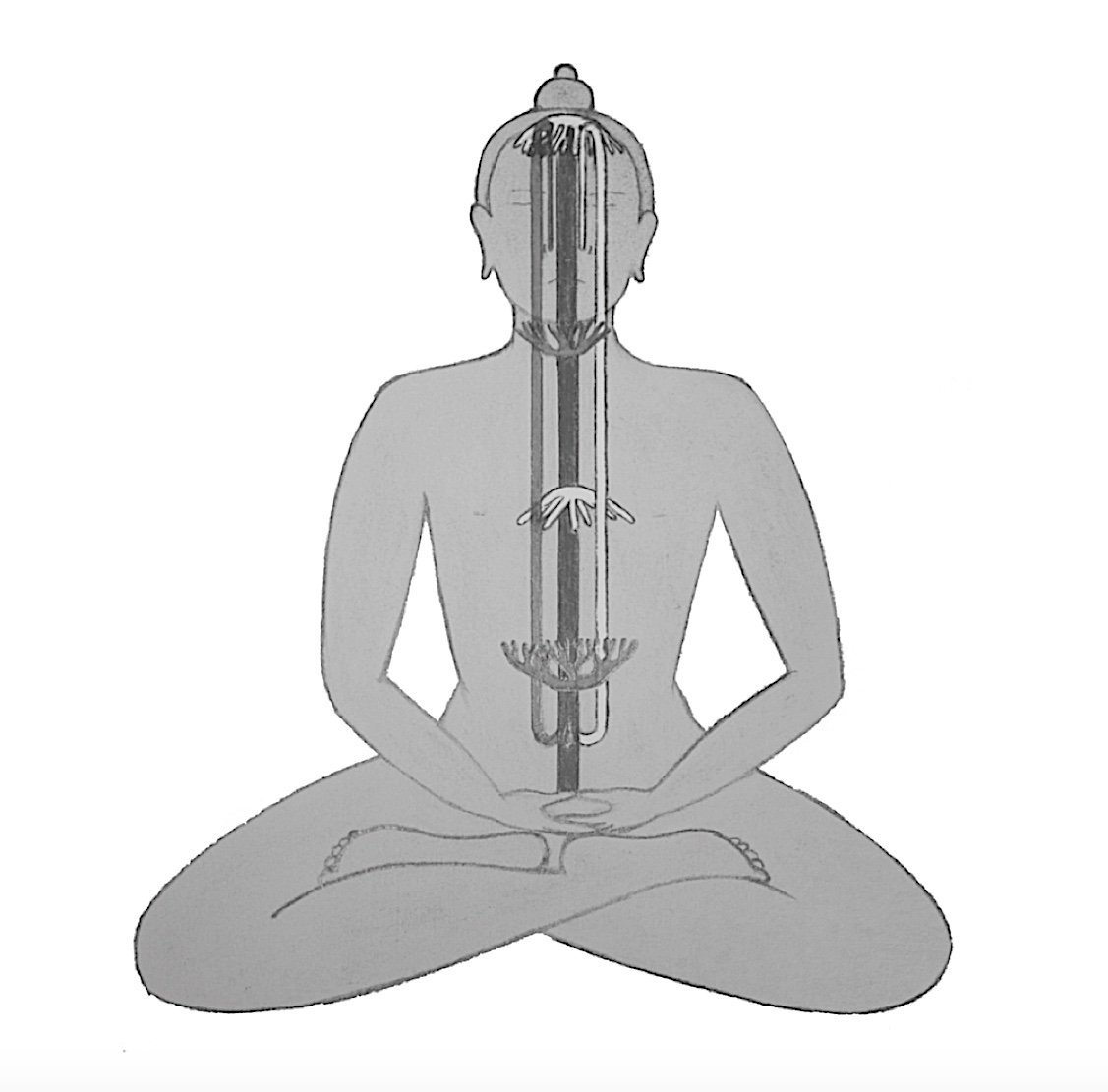 Without getting into specifics of a practice — which requires a teacher and empowerment — other vital differences with Indian Tantra include the associations of three of the chakras with the “bodies” of the Buddhas: